
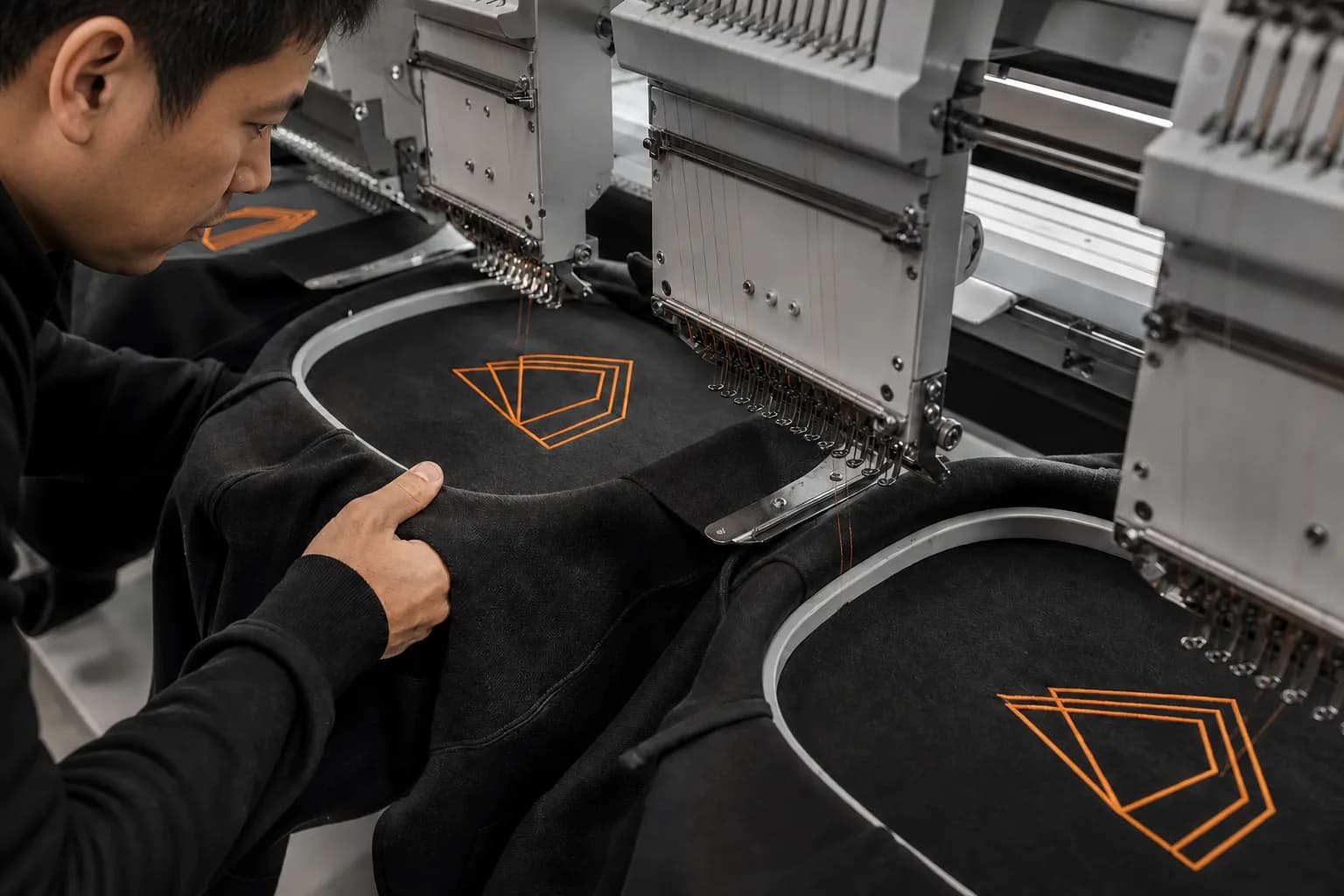
Key production numbers
Planning rangeA standard logo may add roughly USD 1.50–6.00 per garment; dense, large or multi-placement work can be higher.
One-time setupDigitizing converts artwork into machine instructions and should be separated from the running charge.
Main driverStitch count, hooping time, backing and thread changes matter more than logo dimensions alone.
MOQ effectSetup and handling are spread across fewer garments on small orders.
Why embroidery is not priced by centimetres alone
A compact filled logo can contain more stitches than a larger open design. The production route also changes with garment thickness, placement access, thread changes, backing and whether the item needs special hooping.
Ask for digitizing and production charges separately. A reusable approved embroidery file can reduce repeat setup, but a major size, fabric or artwork change may require redigitizing and another test.
A practical planning range
For early budgeting, a standard chest logo on accessible jersey or fleece may add approximately USD 1.50–6.00 per piece at production quantities. Dense back graphics, metallic thread, appliqué, multiple placements or difficult finished-garment access can exceed this range. These are SHENGDE planning estimates, not fixed public quotations.
The quote should state finished dimensions, approximate stitch count, number of colours, placement, backing, garment type, quantity and whether digitizing or a sample strike is included.
Digitizing controls quality
Digitizing defines stitch direction, density, sequence, underlay, pull compensation and trims. A file prepared for a cap or woven shirt may not run correctly on a thick fleece hoodie.
Approve embroidery on the actual or technically equivalent fabric. Review edge definition, fill coverage, puckering, distortion, thread tension and the reverse side. Keep the approved file name and machine notes with the style record.
Fabric and placement change the route
Stable woven panels behave differently from stretchy jersey, brushed fleece or rib. Backing and topping may be required to control movement or prevent stitches from sinking into a textured surface.
Plackets, pockets, seams and finished sleeves can restrict hoop access. Confirm decoration before finalizing pattern and construction so the factory can plan whether to embroider panels before assembly.
Calculate cost across the whole order
Multiply the per-placement running charge by total quantity, then add digitizing, sample, rejected-piece allowance and any special material. If every colourway needs a separate thread setup, include the handling impact.
For repeat orders, preserve the approved garment, artwork, embroidery file, thread references, placement dimensions and wash result. Repeatability is a commercial asset.
Quality checks before bulk release
Measure placement from stable points and inspect registration, loose threads, skipped stitches, puckering and backing removal. Test the decorated garment under the intended care process when durability matters.
CottonWorks notes that fibre, yarn, fabric and garment specifications all affect product performance. Decoration approval therefore belongs with the complete garment, not as an isolated artwork decision.
Embroidery cost drivers
| Driver | Lower-cost direction | Higher-cost direction |
|---|---|---|
| Stitch count | Open, efficient artwork | Dense fills and fine detail |
| Placement | Accessible chest panel | Sleeve, pocket or assembled area |
| Fabric | Stable surface | Stretchy, thick or textured surface |
| Colours | Few thread changes | Many colour stops or specialty thread |
| Quantity | Repeated production run | Short run with fixed setup |
| Testing | Standard approved method | Multiple wash or performance trials |
Frequently asked questions
Is embroidery charged by stitch count?
Stitch count is important, but digitizing, placement, fabric, backing, colours and handling also affect cost.
Can one embroidery file be reused?
Usually when size, fabric and artwork stay compatible; changes may require redigitizing.
Why does embroidery pucker?
Density, tension, backing, fabric stability and hooping can all contribute.
Can you embroider heavyweight hoodies?
Yes, with artwork, backing, needle and hooping adjusted to the real fabric.
Should embroidery be done before sewing?
Panels are sometimes decorated before assembly when the finished placement is difficult to access.
What should I approve?
Approve size, placement, colour, coverage, reverse finish and wash performance on the intended garment.
Sources and verification
Official and industry-primary references used to verify standards, regulations and definitions in this guide.
CottonWorks textile quality testing ↗AATCC textile test methods ↗