Key production numbers
CMT directionThe buyer commonly supplies or nominates materials while the factory cuts, makes and trims.
Full packageThe manufacturing partner coordinates development, sourcing, production, QC and packing.
Decision factorChoose by internal capability, material control and risk—not unit price alone.
Shared requirementBoth models need controlled specifications, approvals and purchase terms.
What cut-make-trim means
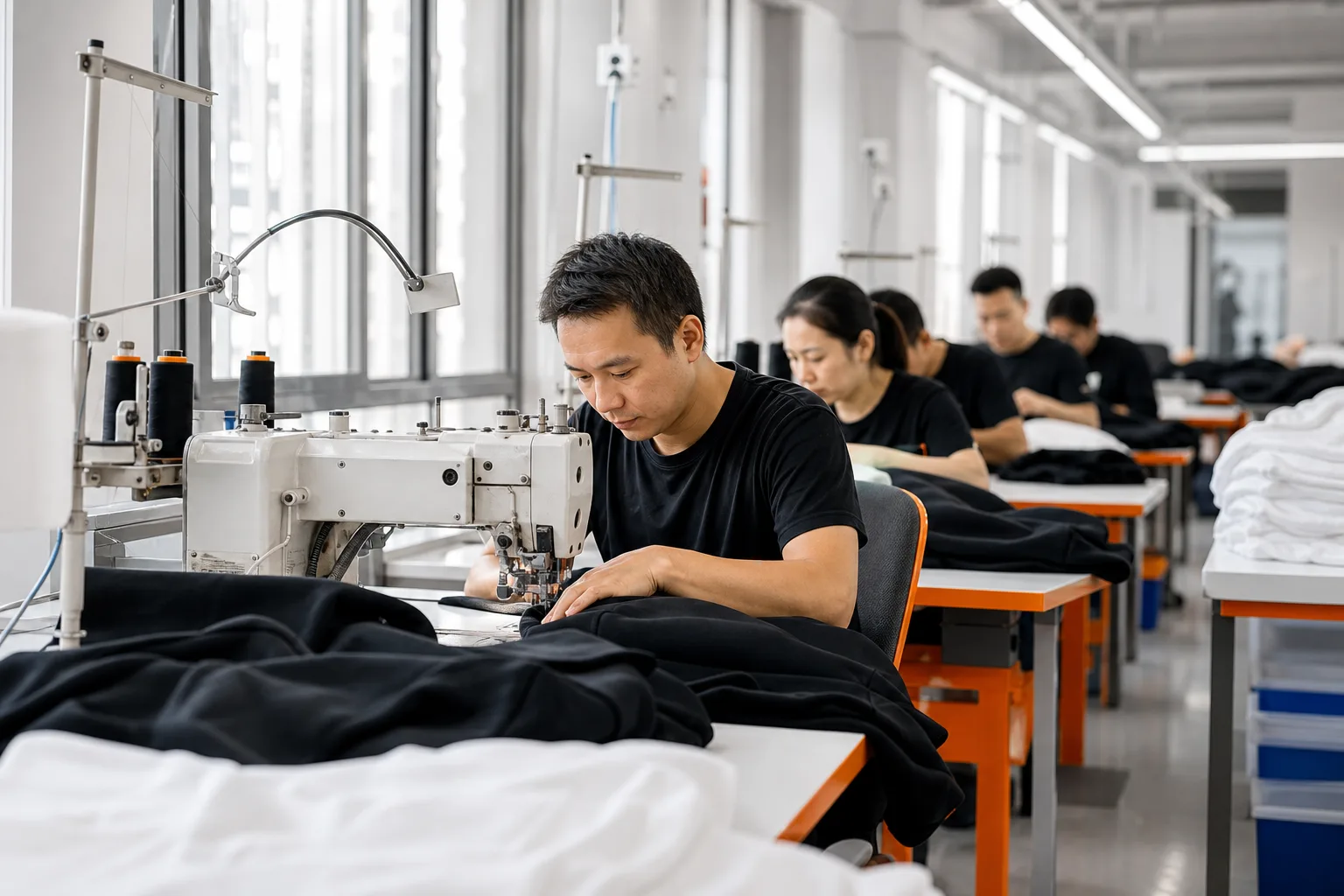
In a CMT arrangement, the buyer normally provides or controls fabric, trims, patterns and technical requirements, while the factory focuses on cutting, sewing and finishing operations.
CMT can suit experienced brands with sourcing teams and nominated suppliers. It can expose sewing cost clearly, but material delay, shortages and defects remain buyer-managed risks unless the contract says otherwise.
What full-package means
A full-package partner supports more of the route: specification review, pattern and sample development, fabric and trim sourcing, decoration, bulk production, quality control, packing and sometimes logistics.
The quotation includes more than labour, so it should document material assumptions, minimums, approval stages and exclusions. A full-package factory does not remove the brand’s responsibility to approve product and compliance decisions.
Compare control and workload
CMT gives the buyer direct material control but requires purchasing, delivery coordination and technical capacity. Full package reduces supplier coordination while making the manufacturer’s sourcing network and transparency more important.
Evaluate who owns excess material, who bears shortage or defect risk, and what happens when a nominated supplier is late. These points can matter more than a small sewing-price difference.
MOQ and cash-flow implications
In CMT, the buyer may need to purchase full mill or trim minimums before sewing. In full package, the manufacturer may combine purchasing leverage or offer available materials, but garment MOQ still depends on material feasibility.
Compare deposits, material ownership, sampling charges and payment milestones across the complete project.
Due diligence remains necessary
The OECD describes garment supply chains as multi-tiered, from raw material and fabric through finished-garment production and subcontracted processes. Buyers should understand which facilities and partners are involved under either model.
Ask about subcontracting, social and environmental controls, traceability and quality escalation. Full-package convenience should not hide the supply chain.
How to select the model
Choose CMT when the brand owns reliable patterns, suppliers and production management. Choose full package when integrated development and sourcing provide more value than direct purchasing.
Hybrid programs are possible: the buyer nominates a critical fabric while the manufacturer sources standard trims and executes production. Record responsibility item by item in the BOM and purchase order.
CMT and full-package comparison
| Area | CMT direction | Full-package direction |
|---|---|---|
| Patterns | Buyer supplies approved pattern | Manufacturer may develop |
| Materials | Buyer supplies or nominates | Manufacturer coordinates sourcing |
| MOQ constraint | Buyer manages supplier minimums | Factory explains included minimums |
| Cost visibility | Labour separated | Integrated project quotation |
| Workload | Higher buyer coordination | Higher factory coordination |
| Risk control | Buyer manages material route | Responsibilities need written allocation |
Frequently asked questions
Is cut-and-sew the same as CMT?
Cut-and-sew is a broad production description; CMT specifically describes a responsibility and pricing model.
Is full package more expensive?
It includes more services, so compare total project cost and risk rather than sewing price alone.
Can I nominate my own fabric?
Often yes in a hybrid or full-package project, subject to delivery and quality responsibility.
Who owns leftover fabric?
The contract should state ownership, storage, disposal and future shade risk.
Does full package include freight?
Only if the quotation explicitly includes the agreed shipping scope and Incoterm.
Which model suits a new brand?
A well-documented full-package route can reduce coordination, but the brand still needs clear approvals and budget control.
Sources and verification
Official and industry-primary references used to verify standards, regulations and definitions in this guide.
OECD garment and footwear due diligence ↗FTC apparel labeling guidance ↗