
Key production numbers
Base sizeFit is first approved in one controlled sample size.
GradingRules add or subtract measurements between sizes while protecting proportions.
MarkerPattern pieces are arranged by size and direction to use fabric efficiently.
Cost linkFabric consumption changes with width, layout, size ratio, matching and defects.
Pattern, grading and marker are different stages
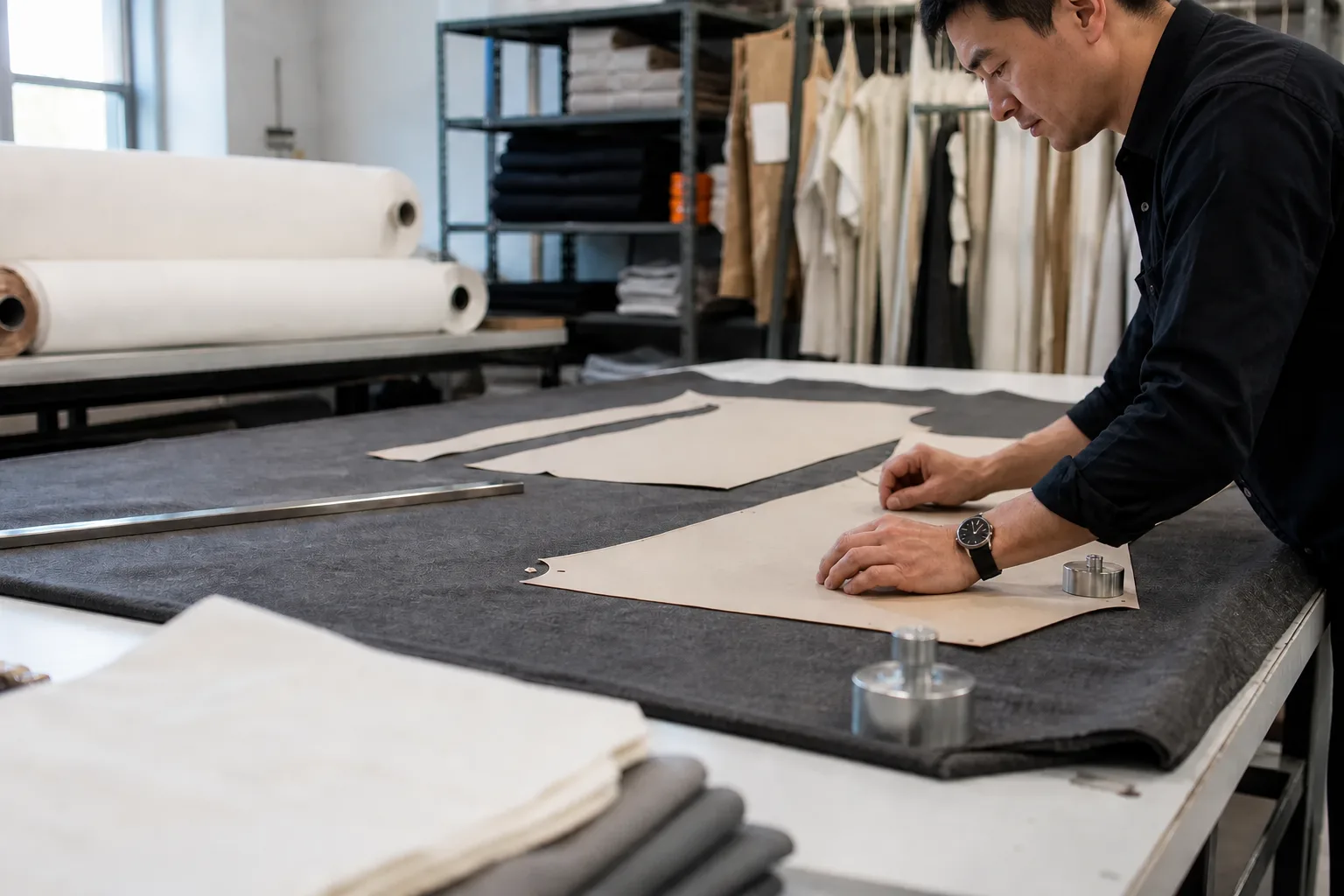
The pattern defines the shape of every garment piece. Grading creates the production sizes from an approved base pattern. Marker making arranges those graded pieces across the usable fabric width for cutting.
Treating them as one invisible factory task makes fit and cost difficult to control. The tech pack should state the approved base size, points of measure, tolerances, grade rules and quantity by size.
Approve the base before grading
Grading does not repair a poor base fit. Approve balance, movement, construction and measurements in the sample size before multiplying the pattern across sizes.
Record actual approved measurements and update the specification. If the body fabric changes substantially after approval, confirm whether shrinkage, stretch or seam behaviour requires another fit review.
Build grade rules around the customer
Not every measurement grows at the same rate. Chest, body length, neck, sleeve, rise and hip need proportionate rules appropriate to product category and target customer.
Review at least selected edge sizes where fit risk is high. A size-set sample can reveal issues that are invisible in the middle size, especially for oversized silhouettes and fitted bottoms.
Marker efficiency affects landed cost
Fabric is often the largest garment cost. Marker efficiency depends on fabric width, direction, nap, stripes, checks, pair requirements, piece shape, size ratio and allowable defects.
An efficient marker cannot ignore grain, one-way print or shade rules. Ask the manufacturer to state consumption assumptions when comparing quotations.
Shrinkage belongs in pattern planning
Wash or relaxation shrinkage can affect marker length and finished dimensions. The pattern or process may need compensation based on approved test data.
CottonWorks emphasizes that fibre, yarn and fabric construction influence garment performance. Therefore, grading and marker decisions should use the approved fabric specification rather than a generic GSM description.
Production control documents
Keep the base pattern revision, grade table, size chart, marker version, fabric width, shrinkage allowance and cut quantity connected to the purchase order.
During inspection, measure the same defined points and compare size-level results. This closes the loop between product development and bulk quality control.
Grading and marker control points
| Stage | Required input | Approval output |
|---|---|---|
| Base pattern | Fit sample and measurements | Approved pattern revision |
| Grading | Size chart and rules | Nested sizes or grade table |
| Fabric | Width, direction and shrinkage | Usable cutting assumptions |
| Marker | Quantity and size ratio | Consumption and layout |
| Cutting | Shade and defect plan | Bundled cut components |
| Inspection | POM and tolerances | Size-level measurement record |
Frequently asked questions
What is the base size?
It is the sample size used to approve the core fit before other sizes are graded.
Can one grade rule fit every brand?
No. Rules should match the product, target customer and approved fit intent.
What is marker efficiency?
The proportion of usable fabric occupied by correctly arranged pattern pieces.
Why does size ratio affect cost?
Different size combinations change the marker layout and average fabric consumption.
Do oversized garments still need grading?
Yes. The intended oversized proportions must remain controlled across sizes.
When is a size set needed?
When edge-size fit or grading risk justifies physical approval before bulk.
Sources and verification
Official and industry-primary references used to verify standards, regulations and definitions in this guide.
CottonWorks garment construction ↗CottonWorks textile quality testing ↗