Key production numbers
Core pagesCover, flats, construction, measurements, grading, BOM, artwork, labels and packaging.
Control ruleEvery issue should carry a style ID, revision and date.
Fit approvalRecord actual sample measurements beside requested measurements and tolerances.
Artwork handoffSupply vector artwork plus placement dimensions from stable garment points.
Start with identity and revision control
Give every style a unique style number, descriptive name, season, owner, revision and issue date. The cover page should state the sample stage and include front and back images. This prevents a factory from combining an old measurement sheet with new artwork.
Keep a change log. Each revision should say what changed, who approved it and whether it affects price or delivery. A single controlled PDF is more dependable than instructions scattered across chat messages.
Draw flats that explain construction
Technical flats should show front, back and necessary internal or close-up views. Number callouts for seams, panels, pockets, hood construction, reinforcement, topstitching and closures. Reference images can help, but they do not replace measurable instructions.
Use consistent vocabulary and connect each callout to a construction note. State stitch appearance, seam finish and special operations only where they affect the intended product; allow the factory to flag impractical or conflicting requirements.
Build the measurement specification
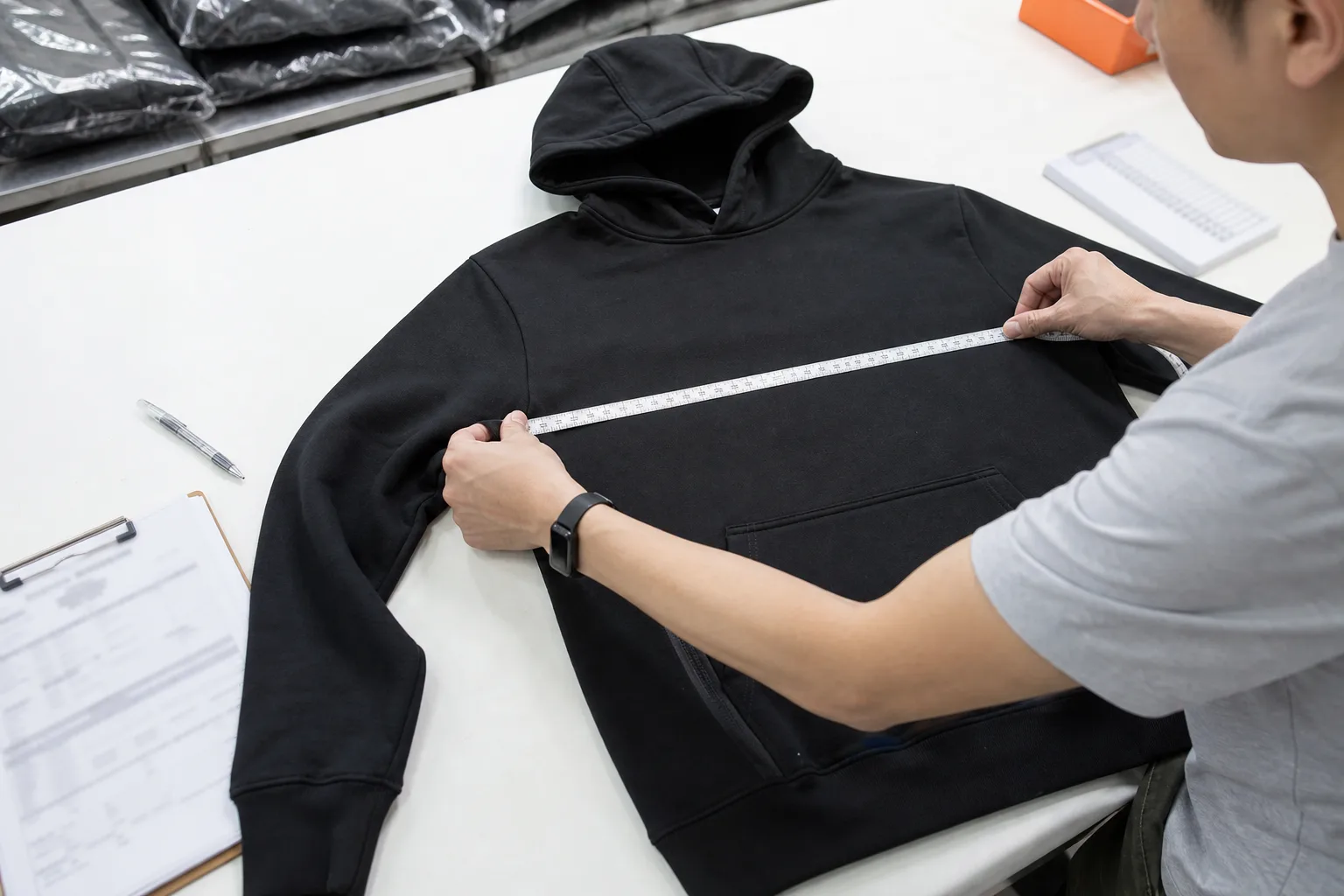
Define points of measure with diagrams, the base sample size, target measurements and tolerances. State whether each measurement is taken flat, relaxed, stretched or around the body. Add grade rules or a complete size chart before bulk sizes are cut.
Measure every sample using the same method. Record actual results next to the specification and comment on fit separately. A garment can meet individual numbers but still require balance, rise, sleeve-angle or movement changes.
Create a complete bill of materials
List body fabric, rib, lining, pocketing, thread, zipper, drawcord, labels, hangtags, stickers, bags and cartons. Include composition, target GSM, colour code, supplier or approved reference, placement and consumption when known.
Identify substitutes that are permitted and changes that require new approval. This matters because material substitutions can affect shrinkage, recovery, colour, decoration and care instructions.
Control artwork and branding
For each print or embroidery, provide the technique, vector file, colour values, finished dimensions and placement from stable points such as high-point shoulder or centre front. Avoid vague directions like “same as photo.”
Labels need exact wording, dimensions, fold, material, colour and placement. The FTC states that most textile and wool products sold in the United States need fiber content, country of origin and responsible-company identification, while care instructions must have a reasonable basis.
Release a production package
Before authorizing bulk, connect the approved sample, final specification, BOM, colour standards, artwork, labels, packaging, quantity breakdown and inspection requirements to the same revision. Mark every outstanding issue closed or explicitly accepted.
Send the purchase order and production release together. If anything changes later, issue a new revision and ask the manufacturer to explain cost, timing and quality consequences before proceeding.
Tech-pack completeness check
| Section | Required information | Common failure |
|---|---|---|
| Cover | Style ID, revision and date | Files without version control |
| Flats | Front, back and callouts | Reference photos only |
| Measurements | POM, size, tolerance and grade | Unclear measuring method |
| BOM | Fabric, trim, labels and packaging | Missing colour or supplier reference |
| Artwork | Technique, dimensions and placement | Low-resolution artwork |
| Labels | Content, care, size and origin | Prepared before materials are final |
| Comments | Issue, action, owner and status | Conflicting messages |
| Release | Approved sample and PO reference | Bulk starts with open points |
Frequently asked questions
Can I make a tech pack without Adobe Illustrator?
Yes. Clear PDF flats, diagrams and tables can work, while artwork should still be supplied in a suitable vector format.
Does every product need a separate tech pack?
Each distinct style should have its own controlled specification, even when it reuses an approved body.
Who creates the grade rules?
A pattern technician can propose grading, but the brand should review the target customer and approve the final size chart.
Should prices be inside the tech pack?
Commercial prices usually belong in the quotation or purchase order, while technical requirements stay in the pack.
When should care labels be finalized?
After final materials and a defensible care procedure are confirmed.
Can SHENGDE work from a reference sample?
Yes. A reference can start development, but measurements, materials, artwork and approval records are still needed.
Sources and verification
Official and industry-primary references used to verify standards, regulations and definitions in this guide.
FTC apparel labeling guidance ↗FTC Care Labeling compliance guide ↗