
Key production numbers
Planning rangeA simple development sample often starts around USD 80–250; complex cut-and-sew styles can be higher.
Typical roundsBudget for 2–3 controlled rounds rather than assuming the first sample is final.
SHENGDE targetA first sample is typically targeted within 15 days after specifications and materials are confirmed.
Cost controlFreeze measurements, fabric direction and artwork before requesting the sample.
What a sample fee actually pays for
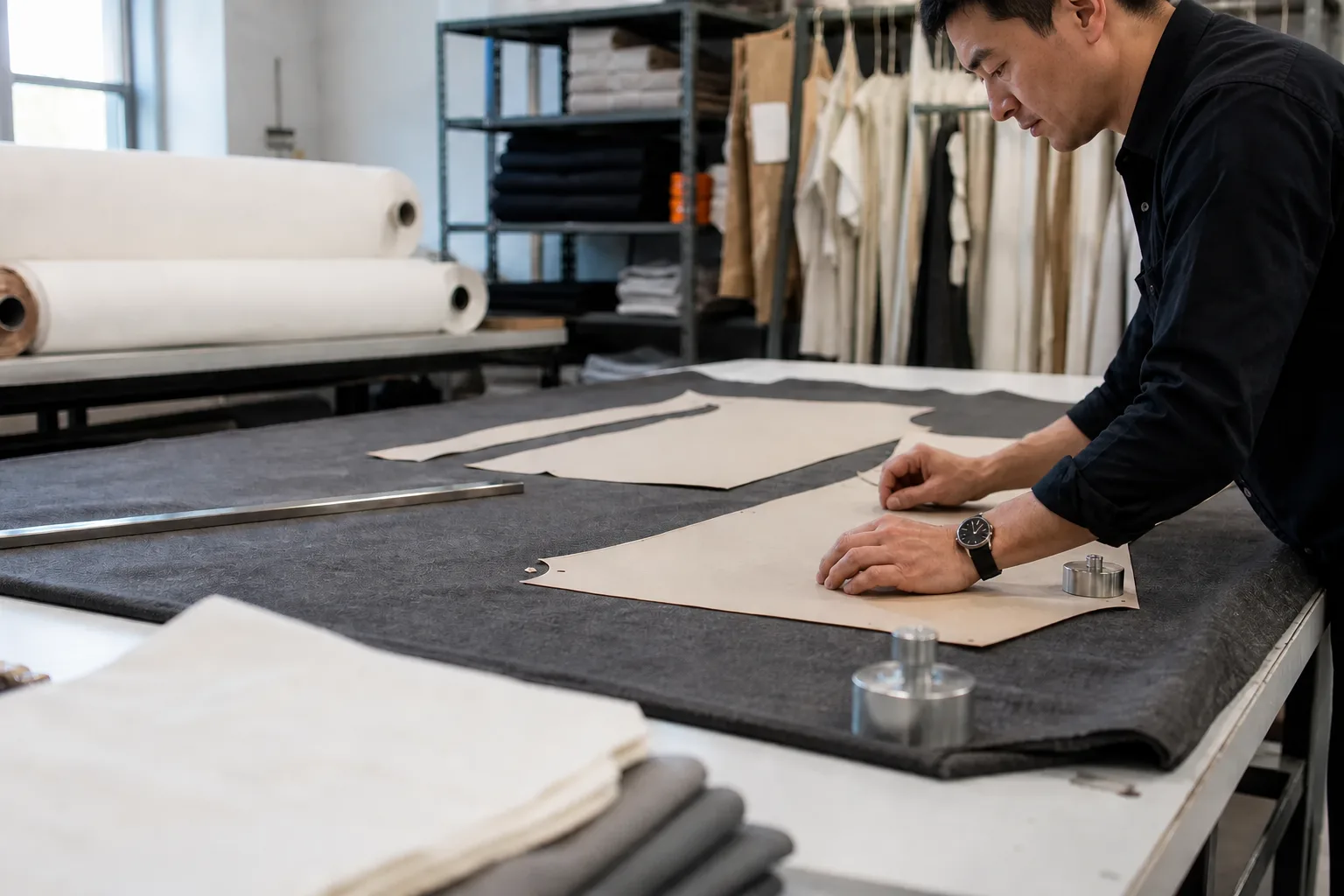
A sample fee is not just the cost of one garment. It can include specification review, pattern development, fabric and trim sourcing, cutting, sewing, decoration setup, pressing, measurement, photography and packing. These tasks are performed before the factory can spread them across a bulk order.
A basic T-shirt made from available jersey is therefore different from a lined jacket with custom hardware, wash effects and embroidery. Ask the supplier to separate pattern, material, decoration and courier costs so later revisions are easier to understand.
Planning ranges, not fixed quotations
For early budgeting, a straightforward T-shirt or sweatshirt sample may fall around USD 80–180, while a hoodie, sweatpant or more developed cut-and-sew style may fall around USD 120–250. Jackets, engineered panels, custom washes and special trims can exceed these ranges. These are SHENGDE planning estimates, not public price promises.
The final amount depends on whether a pattern exists, whether fabric is available by the metre, how many decoration setups are required and whether custom trims must be produced at supplier minimums. Request a written sample scope before payment.
Why two or three rounds are normal
The first round proves construction, approximate fit and material direction. The second resolves measured comments and confirms details. A pre-production sample may then represent the final bulk standard. Combining every decision into one round can save time only when the original tech pack is already precise.
Use one numbered comment sheet for each round. Record actual measurements, requested measurements, photos, responsible party and status. Do not start bulk while fit, colour, decoration or care instructions remain open.
Tests and labels belong in the plan
Wash testing, dimensional-change testing, colourfastness or print testing may be needed when performance claims or destination requirements matter. AATCC maintains industry test methods, including methods for dimensional change after home laundering. Test requirements should be selected for the product and market rather than copied from another style.
For the United States, the FTC Care Labeling Rule requires manufacturers and importers to have a reasonable basis for care instructions. That is why final care wording should follow confirmed materials and evidence, not an early design assumption.
How to reduce sampling spend safely
Consolidate comments, reuse an approved body where appropriate and avoid ordering custom-dyed fabric before fit is stable. Start decoration tests on a panel when placement and technique—not fit—are the open question. Keep every approved file in one revision-controlled folder.
Reducing the number of uncontrolled changes saves more than skipping an approval round. A late fabric substitution can change drape, shrinkage, decoration and measurements, forcing the sample process to restart.
A complete sample request
Send the style name, revision, technical flats, measurements, fabric composition and GSM, colour reference, artwork, labels, packaging, target quantity, destination and launch date. Mark which points are fixed and where you want the manufacturer to recommend options.
Ask for the sample type, included materials, expected completion date, courier method, revision policy and whether any fee is credited against bulk. The answer gives the brand a more realistic development budget.
Sample budget worksheet
| Cost item | Lower-complexity direction | What raises cost |
|---|---|---|
| Pattern | Approved block or simple adjustment | New silhouette, panels or tailoring |
| Fabric | Available stock fabric | Custom dye, finish or small-lot sourcing |
| Decoration | One standard placement | Multiple screens, embroidery or wash tests |
| Trims | Available labels and trims | Custom metalwork, zipper or mould |
| Rounds | Clear consolidated comments | Repeated design changes |
| Testing | Internal wash review | Third-party performance tests |
| Courier | Consolidated shipment | Urgent international shipment |
Frequently asked questions
Is the sample price the future bulk unit price?
No. Sampling includes one-time development work and is not a bulk unit-price forecast.
Can the sample fee be refunded?
Some projects may credit part of a fee against bulk, but this must be confirmed in the quotation.
How many samples should I order?
Plan the number of rounds needed to approve fit, materials, decoration and the final production standard.
Can I sample with substitute fabric?
Yes for early fit evaluation, but the final fabric should be approved before bulk because drape and shrinkage can change.
Who pays the courier?
The quotation should state whether international courier charges are included or billed separately.
What makes a sample production-ready?
It is connected to an approved specification, material list, artwork, labels, measurements and written comments.
Sources and verification
Official and industry-primary references used to verify standards, regulations and definitions in this guide.
FTC Care Labeling Rule ↗AATCC international textile test methods ↗