Key production numbers
Minimum pagesCover, flats, measurements, materials, artwork, labels, packaging and revision comments.
Most common riskUncontrolled versions causing sample comments, PO details and bulk standard to conflict.
Best formatPDF for controlled review, plus editable source files and vector artwork.
Approval useThe approved tech pack should connect to sample, purchase order and inspection standard.
The product source of truth
A tech pack converts a design into instructions a pattern maker, sample room, factory and inspector can follow. It reduces interpretation by defining what the garment is, how it is measured and which materials and details are approved.
It is also a change-control document. Give each revision a date or version, consolidate comments and ensure the purchase order refers to the approved release.
Identification and technical flats
Include style name, style number, season, owner, revision, front and back flats and detailed views. Call out seams, panels, pockets, closures, stitching, reinforcement and placement dimensions.
Use consistent terminology and numbered callouts. Reference images can explain intent, but should not replace measurable instructions.
Measurement specification
Define points of measure with diagrams, sample size, targets and tolerances. Provide grade rules or a full size chart for bulk sizes. State whether dimensions are measured relaxed, stretched, flat or around the body.
Review fit and movement, not numbers alone. Record approved sample measurements so corrections remain traceable.
Materials and branding
The bill of materials should list body fabric, rib, lining, thread, zipper, drawcord, labels, hangtags and packaging. Add composition, colour, GSM and supplier reference where known.
Artwork pages should include vector files, dimensions, colours, technique and location from stable garment points. Care-label content must match the final material and destination.
Control sample feedback
Comment with photos, measurements and clear actions instead of vague notes. Mark each item approved, revise or pending, then issue one consolidated revision.
Before bulk, confirm sample, measurements, materials, colour, artwork, labels, packaging, quantity and inspection requirements all refer to the same version.
How a factory uses the tech pack
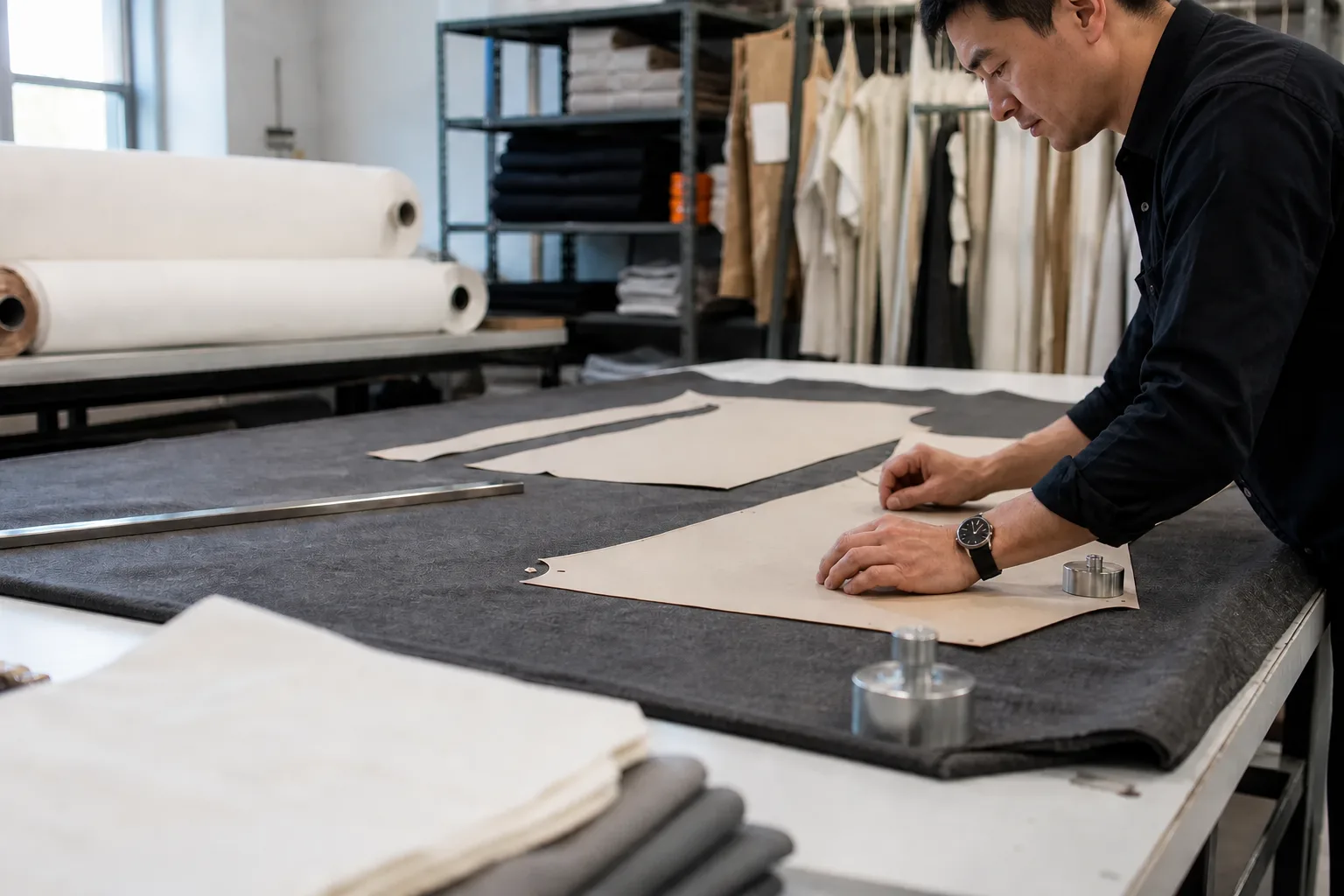
The merchandiser uses it to quote and identify missing details. The pattern maker uses flats and measurements to prepare the sample. The sample room uses construction and material notes to build the reference garment. The inspector uses tolerances and approved comments to check bulk production.
Because several teams depend on the same document, every revision should be dated and numbered. A single changed measurement or trim can affect pattern, fabric consumption, sample timing and bulk cost.
What to send when you do not have a full pack
Send reference photos, target measurements, desired fabric or GSM, quantity, artwork, labels, packaging and target destination. Mark what is fixed and what is flexible. A manufacturer can then tell you which details must be confirmed before sampling.
For custom development, SHENGDE can review incomplete briefs, but accurate sampling and quoting are faster when the buyer controls the style name, revision, measurement chart, material direction and artwork files.
Body measurements and garment measurements are different
A body measurement describes the person; a garment measurement describes the finished product laid or measured according to a defined method. The difference creates ease and determines fit. A tech pack must state which type is being used so a factory does not build a garment directly from body dimensions without the intended wearing allowance.
ISO 8559-1 provides standardized anthropometric definitions used for clothing size work. Brands still need product-specific garment points of measure, diagrams and tolerances. Define where each measurement starts and ends, whether the garment is relaxed or stretched and whether curved seams are followed or measured straight.
Build a usable bill of materials
The bill of materials, or BOM, should identify every component: shell fabric, rib, lining, interfacing, thread, zipper, drawcord, eyelet, label, hangtag, bag, sticker and carton requirement. Use one line per component with composition, colour, supplier or reference, placement, quantity per garment and approval status.
Do not use only visual descriptions such as premium cotton or high-quality zipper. Record measurable or verifiable information. For destination-market labelling, the brand or importer should confirm the required fibre, origin, identity and care information; the tech pack then controls the approved label artwork and placement.
Create an artwork page that production can measure
Include artwork name, version, vector file reference, technique, finished width and height, colour references and placement measurements from stable garment points. A mock-up showing approximate location is not enough for bulk inspection. For repeat styles, preserve the approved dimensions and placement unless the garment pattern changes.
Separate screen print, DTG, embroidery, patch and appliqué instructions because their setup files and constraints differ. Add a strike-off or decoration approval box with date and version. If artwork crosses a seam, pocket or zipper, identify that risk before sampling.
Grade rules and size-set control
A base-size sample proves only one size. Bulk production needs either a complete specification for every size or clear grade rules showing how each point changes. Grade rules should reflect the target customer and silhouette rather than adding the same amount to every measurement.
Review at least critical small, base and large sizes when the fit is unusual, the range is wide or the fabric has limited stretch. Record which measurements are critical to function and appearance. ISO clothing size guidance can support consistent terminology, but the brand remains responsible for its intended size profile.
Tolerance is not permission to move every measurement
Tolerance defines an acceptable production variation around the target; it should not replace accurate patterns and cutting. Use tighter tolerances for visually or functionally critical points and realistic tolerances for measurements affected by fabric, washing or long seams. Avoid one blanket tolerance for the entire garment.
Inspection should evaluate individual points and overall balance. A garment can technically sit inside several tolerances yet look wrong if all deviations move in the same direction. Identify high-risk points such as neck opening, chest, body length, sleeve length, waistband, inseam and zipper alignment.
Version control from first sample to bulk
Name each release with style code, version and date. Keep one current master PDF and archive previous versions rather than overwriting them. Consolidate comments from email, messaging and meetings into the document so the pattern maker, merchandiser, print team and inspector receive the same instruction.
Before bulk authorization, issue a final checklist covering approved sample, measurements, fabric, colour, decoration, labels, packaging, quantity and shipping requirements. The purchase order should cite this version. Any later change needs written impact review for cost, lead time and sample status.
Tech-pack handoff checklist for faster quotations
Send the controlled PDF, editable measurement file where applicable, vector artwork, colour references and reference photos together. Add quantity by colour and size, destination, target arrival date and the decisions where alternatives are acceptable. This lets the manufacturer price the same scope that the brand expects to approve.
Ask the supplier to return a list of assumptions and open questions rather than silently filling gaps. Resolve missing fabric, tolerance, decoration and packaging details before comparing quotations. A fast quote built on incorrect assumptions usually creates slower sampling and avoidable revisions.
Production-ready tech-pack checklist
| Page or file | Required information | Approval evidence | Common failure |
|---|---|---|---|
| Cover | Style code, owner, date and version | Current release identified | Teams use different revisions |
| Technical flats | Front, back, details and callouts | Construction comments closed | Reference image replaces instruction |
| Measurements | POM diagram, targets and method | Approved sample measurements | Body and garment dimensions mixed |
| Grade rules | Size-by-size values or increments | Size set reviewed where required | Base size copied without fit logic |
| BOM | Fabric, trims, labels and packaging | References and colours approved | Generic material descriptions |
| Artwork | Vector file, size, colour and placement | Strike-off or sample approved | Mock-up has no measurements |
| Labels | Fibre, care, origin, identity and placement | Market requirements reviewed | Label printed before material confirmation |
| Packaging | Fold, bag, barcode and carton marks | Packing sample or specification | Retail requirements arrive late |
| Revision log | Issue, action, owner and status | Final bulk version released | Comments remain in separate chats |
Frequently asked questions
Do I need one for a sample?
A simplified pack is still valuable because it records measurements, materials and details.
Can a factory create it?
Many can support development, but the brand should approve and retain the final requirements.
What file format is best?
PDF works for controlled sharing; editable source files and vector artwork should also be supplied.
What is the difference between a tech pack and a specification sheet?
A specification sheet may cover measurements or construction, while a complete tech pack connects identification, flats, measurements, materials, artwork, labels, packaging and revisions.
Should body measurements go in a tech pack?
They can support sizing strategy, but factories also need finished garment measurements, points of measure, ease and tolerances.
How many tech-pack revisions are normal?
There is no universal number. Revise whenever approved measurements, materials, construction or artwork change, and keep one clearly identified current version.
Do I need grade rules before the first sample?
A base-size sample can begin first, but bulk sizing requires approved grade rules or a full size specification before production.
Who owns the final tech pack?
The commercial agreement should state ownership. The brand should retain the approved production release and source files needed to control future orders.
Sources and verification
Official and industry-primary references used to verify standards, regulations and definitions in this guide.
ISO 8559-1:2017 — anthropometric definitions for body measurement ↗ISO 8559-3:2018 — methodology for body measurement tables ↗US Federal Trade Commission — clothing and textile labelling guidance ↗European Union — textile fibre names and labelling regulation ↗