Key production numbers
Approval statusMark every line approved, revise, pending or accepted deviation.
Measurement checkRecord target, tolerance and actual result using one defined measuring method.
Bulk gateDo not release production while critical fit, material or artwork points remain open.
EvidenceKeep signed or dated photos, files and the physical reference sample.
Identify the exact sample
Record style number, colour, size, sample type, revision, received date and the specification used. Photograph the front, back, inside and critical details. Without this identity, an approval can be applied to the wrong version.
State whether the sample is for fit, sales presentation, photo use, size set or pre-production approval. One sample may not prove every bulk material, colour or size.
Check measurements and fit separately
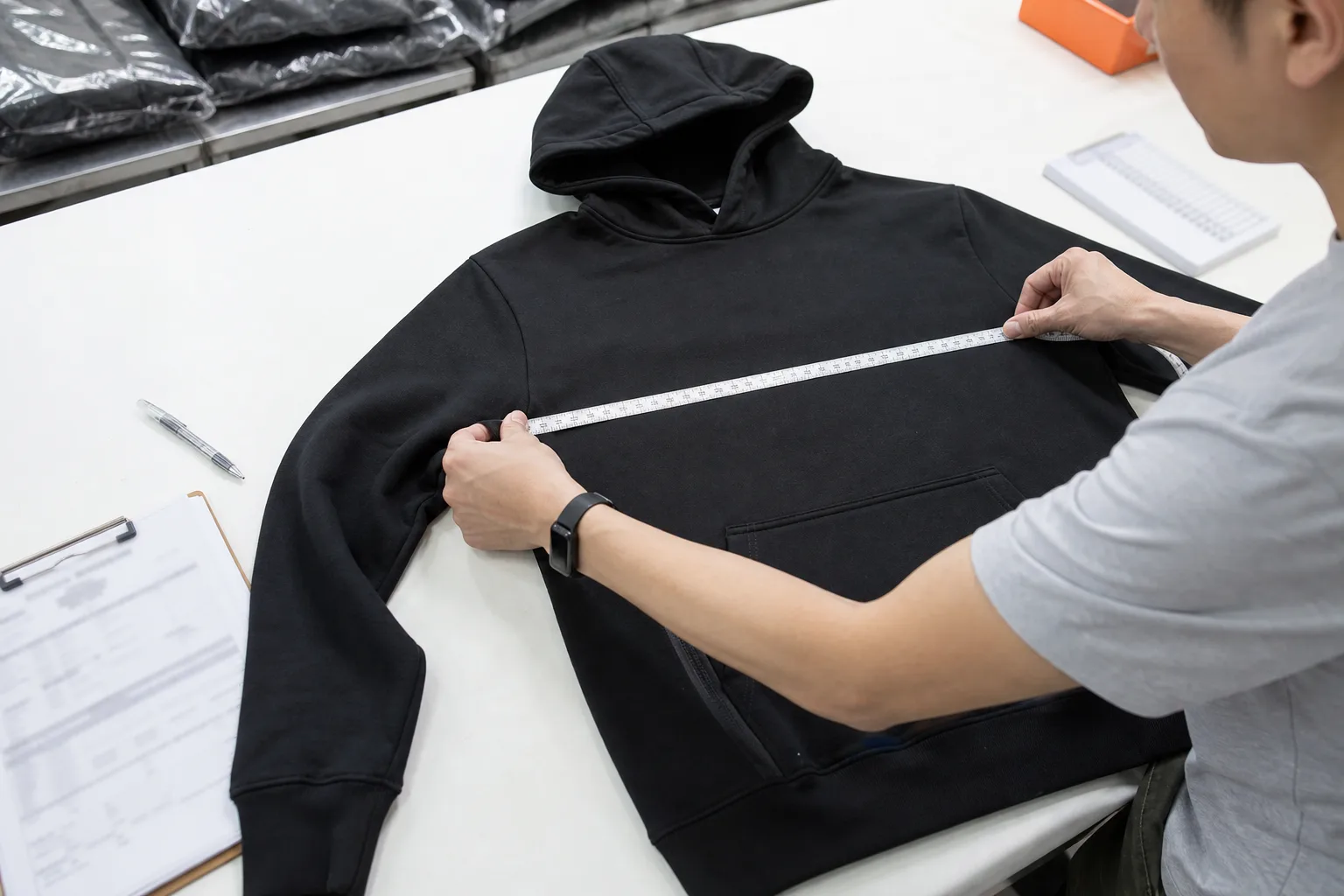
Measure every defined point using the tech-pack method and record target, tolerance and actual. Then evaluate balance, comfort, movement, neckline, sleeve angle, rise, pocket access and visual proportion on the intended wearer or form.
A sample can fall inside tolerance and still fit poorly. Conversely, a small measured deviation may be accepted if the fit is correct. Record the decision and update the specification so bulk inspection has one standard.
Confirm fabric and trims
Compare composition, GSM, colour, hand feel, stretch, recovery, surface, inside finish and shrinkage direction with the approved requirement. Check rib, zipper, cord, elastic, snaps, labels and thread for colour and function.
If the sample used substitute material, list every substitution and require approval of the bulk alternative. Do not sign a generic approval that hides unresolved materials.
Inspect construction and decoration
Review seam type, stitch appearance, reinforcement, symmetry, pocket and hood shape, loose threads and pressing. Measure print or embroidery dimensions and placement from stable garment points.
Inspect registration, opacity, edge quality, backing, hand feel and visible damage. Large or specialty decorations should be reviewed after representative washing or handling.
Validate labels, care and packaging
Check brand, size, fibre content, origin, care wording, spelling, fold, placement and durability. For the U.S. market, FTC guidance requires most textile products to disclose fibre content, country of origin and responsible-company identity, and care instructions need support.
Confirm folding, bag warning where applicable, barcode, sticker, assortment and carton marks. Packaging is part of the delivered specification, not an afterthought.
Issue a controlled decision
Send one consolidated report with photos, measurements, required actions, owners and status. State whether the sample is approved, approved with recorded deviation or rejected for revision. Set a deadline for closing open items.
The bulk release should reference the approved sample and matching tech-pack revision. Retain the physical reference or an agreed sealed sample for final inspection.
Pre-production sample approval matrix
| Area | Evidence to retain | Release condition |
|---|---|---|
| Identity | Style, revision, colour and photos | Correct sample confirmed |
| Measurements | Target, tolerance and actual | Critical points approved |
| Fit | Wear notes and photos | Movement and balance accepted |
| Materials | Fabric and trim references | Bulk materials confirmed |
| Construction | Detail photos and comments | Operations match specification |
| Artwork | Measured placement and appearance | Colour and technique approved |
| Labels | Final content and placement | Destination requirements reviewed |
| Packaging | Pack sample and carton marks | Bulk method approved |
Frequently asked questions
Who should approve the sample?
The brand owner responsible for product, fit and commercial requirements should give the controlled release.
Can bulk start after fit approval?
Only if all relevant materials, artwork, labels and production requirements are also resolved.
What is an approved deviation?
A measured difference that the buyer knowingly accepts and records as the bulk standard.
Do I need a size set?
It is valuable when grading or size risk is significant; the required sizes should be agreed before bulk.
Should samples be washed?
When shrinkage, colour, care or decoration performance matters, use an appropriate documented test.
Can photos replace a physical sample?
Photos help record details, but fit, hand feel, colour and construction may still require a physical reference.
Sources and verification
Official and industry-primary references used to verify standards, regulations and definitions in this guide.
FTC Care Labeling compliance guide ↗AATCC test-method manual update ↗