Key production numbers
Purpose firstEach sample answers one question — design, fit, grading, bulk materials or bulk workmanship. Name the question before you order it.
Small-run realityBrands making 50–500 pieces per style usually need a proto/fit sample and a pre-production sample, not the full big-brand sequence.
SHENGDE timingA physical sample is typically targeted within 15 days after the specification, materials and artwork are confirmed.
Bulk gateSHENGDE starts bulk production only after the buyer approves the physical sample.
Why sample names matter
Factories, agents and brands use sample names as shorthand for what has been approved. If a brand says "the sample is approved" without saying which sample, a factory can reasonably assume fit, fabric, colour and decoration are all signed off, when the brand only meant the shape looked right.
Write the sample type, revision number, size, colour and the tech pack version on every comment sheet. That single habit prevents most "but we approved something else" disputes on small production runs.
Proto sample (first sample)
The proto is the first physical interpretation of the design. Its job is to prove the idea: silhouette, proportions, panel lines, pocket positions and general construction. It is often made in available or substitute fabric because bulk fabric may not have been ordered yet.
Judge a proto on design intent and pattern direction, not on colour or exact hand-feel. Mark every change against the tech pack so the next sample is a controlled revision rather than a new guess.
Fit sample
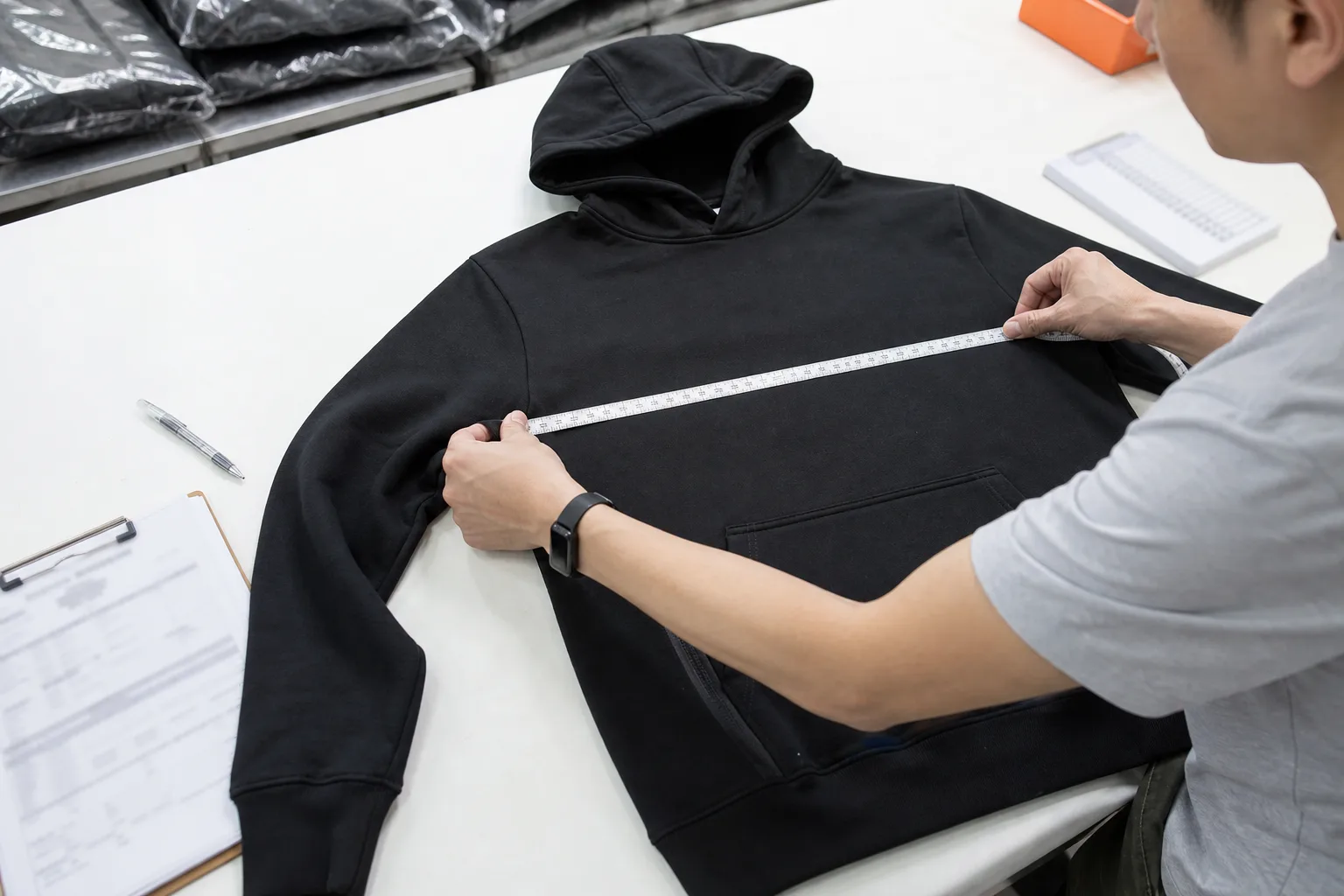
A fit sample is made in the base size and checked on a fit model or a body that matches the brand's target customer. It tests ease, length, drop shoulder, rise, sleeve pitch and movement. Measurements should be recorded against the spec sheet with the tolerance written next to each point of measure.
Many small brands combine the proto and fit stage: the first sample is made close to the intended fabric weight so it can be fitted at the same time. That saves a round, but only works when the tech pack already contains a complete measurement chart.
Salesman, photo and marketing samples
These samples are made for photography, pre-orders, showrooms or influencers. They need to look like the final product but are not proof of bulk quality. Order them only after fit is stable, otherwise you may photograph a garment that will change.
If pre-order photos are the goal, ask for samples in the exact bulk colour and decoration so the product page does not need to be reshot later.
Size set sample
A size set is one garment in each size, or in the smallest, base and largest sizes. It checks the grading rules — whether every size keeps the intended proportions. It matters most for fitted garments, wide size ranges and extended sizing such as 3XL–8XL.
For boxy tees and oversized hoodies in a narrow size range, some brands accept a graded measurement chart instead of a full physical size set. For jeans, tailored outerwear and big & tall grading, a physical size check is usually worth the cost.
Pre-production (PP) sample
The PP sample is the most important approval for a small run. It is made with the bulk fabric, bulk trims, bulk labels and final decoration method, using the approved pattern. It is the reference the factory will build production against.
Approve the PP sample in writing and keep it physically. If a later bulk garment differs, both sides compare it with this sample — not with a photo or a memory of an earlier version.
Top of production (TOP) and shipment samples
A TOP sample is pulled from the first finished garments on the production line. It confirms that bulk workmanship matches the approved PP sample before the full quantity is finished. Shipment samples are taken from packed goods to show what is actually leaving the factory.
On a 50–500 piece order the run is short, so the practical version is in-line photo and video updates plus a final inspection of finished, packed goods rather than a separately shipped TOP sample.
What a 50–500 piece brand usually needs
For a first style with a complete tech pack: one proto/fit sample, revisions only where measurements or construction fail, then a PP sample in bulk materials. For a repeat style with unchanged pattern and fabric: often only a PP or colour/decoration approval.
Every extra sample round adds roughly another sampling cycle to the calendar and another sample charge. SHENGDE's planning estimate for sampling is USD 80–250 per style depending on complexity, confirmed per project. The fastest way to reduce rounds is a tech pack with measurements, tolerances, fabric, trims and artwork placement fully specified.
Clothing sample types and what each one approves
| Sample | Main question it answers | Bulk materials required? | Usually needed for 50–500 pcs? |
|---|---|---|---|
| Proto | Does the design and pattern direction work? | No — substitutes acceptable | Yes, for new styles |
| Fit | Does the base size fit the target customer? | Close weight preferred | Yes — often combined with proto |
| Salesman / photo | Can we sell or shoot it before bulk? | Should look final | Only if pre-selling |
| Size set | Is the grading correct across sizes? | Preferred | For fitted, denim or extended sizes |
| Pre-production (PP) | Is this exactly what bulk will be? | Yes — bulk fabric, trims, labels | Yes — the key approval |
| Top of production (TOP) | Does bulk workmanship match the PP? | Yes — taken from bulk | Usually replaced by in-line photos and final inspection |
Frequently asked questions
What is the difference between a proto sample and a PP sample?
A proto proves the design and pattern, often in substitute fabric. A PP sample uses bulk fabric, trims, labels and decoration and becomes the reference for production.
How many samples does a small clothing brand need?
With a complete tech pack, usually one proto/fit sample plus a PP sample per new style. Repeat styles may only need a PP or colour approval.
Can I skip the size set?
For relaxed garments in a narrow size range a graded measurement chart may be enough. For fitted garments, jeans or extended sizing a physical size check is safer.
How long does a sample take at SHENGDE?
A physical sample is typically targeted within 15 days after the specification, materials and artwork are confirmed.
Does an approved photo count as approval?
No. Approve the physical PP sample in writing and keep it, so bulk garments can be compared with it.
Who pays for samples?
The buyer normally pays sample charges. SHENGDE's planning estimate is USD 80–250 per style, confirmed per project.
Sources and verification
Official and industry-primary references used to verify standards, regulations and definitions in this guide.
ISO 8559-1:2017 — anthropometric definitions for body measurement ↗CottonWorks — textile quality testing ↗