The short answer
A factory-direct supplier owns the production line and controls fabric, cutting, sewing and finishing in one place. A trading company resells production capacity — usually from multiple factories — and adds a margin for coordination. For custom cut-and-sew programs where fit, fabric and quality control matter, factory-direct usually wins; trading companies can be useful for small mixed orders or categories you do not buy in volume.
The risk is misrepresentation: some trading companies claim to be factories. Verifying which one you are talking to changes your quality risk, pricing and recovery options if something goes wrong.
What actually differs
Control: a factory can change pattern, fabric or process on the line and show you the result; a trader must relay changes to the factory. Pricing: a factory quotes its own cost plus margin; a trader layers a second margin. Quality: a factory answers directly for defects and rework; a trader's accountability depends on its contract with the factory.
Communication: factory teams can answer technical questions — GSM, stitch density, wash recipes — directly; traders often translate between buyer and producer, which adds delay and room for error. Lead time and MOQ also differ: factories plan their own capacity, while traders aggregate orders.
When a trading company can make sense
Small mixed orders across categories you do not buy in volume, one-off samples from multiple factories, or markets where you need local language support and do not yet have a factory relationship. The premium you pay is for coordination, not production.
The trade-off is less control and an extra link in the chain: your specification goes through the trader, and quality disputes are resolved through them. Keep documentation clear if you start this way, and plan to move core categories to a direct relationship as volumes grow.
When factory-direct wins
Custom cut-and-sew programs, original silhouettes and fits, custom fabrics and weights, coordinated collections, and any program where sample-to-bulk consistency is critical. Factory-direct also wins on repeat orders: the factory retains your specification and approved sample, so reorders and new colourways start from the approved baseline.
SHENGDE operates factory-direct from Dongguan: pattern, grading, fabric sourcing, cutting, sewing, decoration and packing under one roof, with sample approval required before bulk and DDP/DDU delivery offered worldwide.
How to verify you are factory-direct
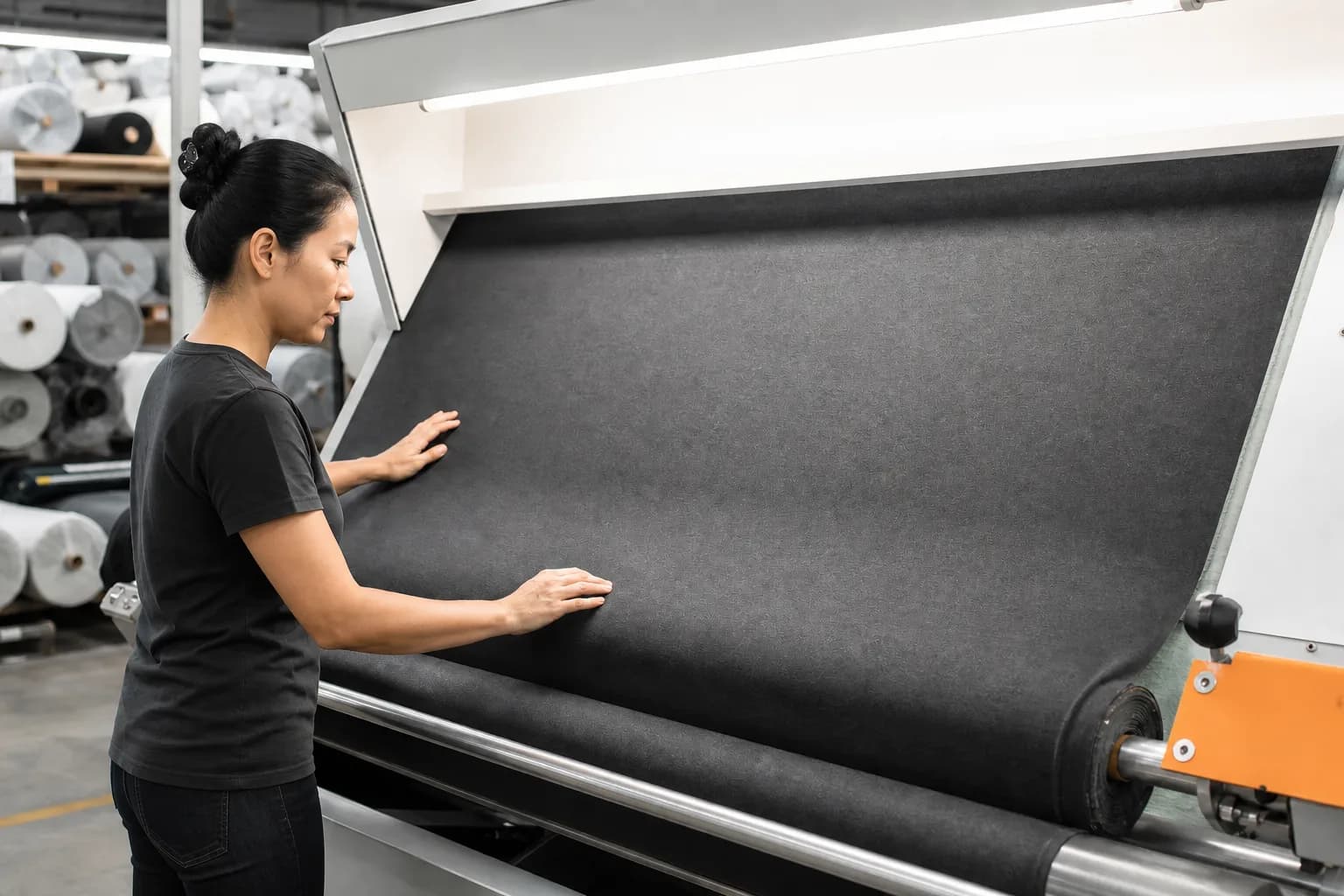
Ask for production-floor evidence: live photo or video of your order on the line, fabric rolls, cutting tables and sewing stations. Check that the registered business address matches a manufacturing site, and ask for factory registration details. A real factory can show you machines running your order; a trader shows you a factory tour that is not theirs.
Beware generic evidence: a stock photo of a sewing line proves nothing. Ask for something time-stamped or specific to your order — fabric with your colour, labels with your branding, a carton with your shipping mark.
Comparison at a glance
Control over production: factory — full; trader — indirect. Pricing: factory — own cost plus margin; trader — layered margin. Quality accountability: factory — direct; trader — via contract. Technical communication: factory — direct with production team; trader — relayed. Retained specs for reorders: factory — yes; trader — depends. Best fit: factory — custom cut-and-sew and repeat programs; trader — small mixed orders and low-volume categories.
Frequently asked questions
Is factory-direct always cheaper? Not always on unit price, but usually on total cost: fewer margins, faster technical communication and retained specifications reduce rework and reorder cost. How do I check a factory licence? Ask for business registration and cross-check the registered address against the production site. Can a trading company provide quality control? Some do, but accountability is indirect; define inspection expectations in writing. Do you do small orders? SHENGDE starting quantities can be discussed from 50 units per style, with sampling as the first step. What about delivery? DDP and DDU options are available worldwide, quoted transparently.
Sources and verification
Capability and program figures reflect SHENGDE factory-direct production in Dongguan, as published on shengdeclothing.com (2026): sample target within 15 days, MOQ from 50 units per style, capacity up to 10,000 units per month, DDP/DDU worldwide.
Frequently asked questions
Is factory-direct always cheaper?
Not always on unit price, but usually on total cost: fewer margins, faster technical communication and retained specifications reduce rework and reorder cost.
How do I check a factory licence?
Ask for business registration and cross-check the registered address against the production site; request production-floor evidence of your order.
Can a trading company provide quality control?
Some can, but accountability is indirect — define inspection expectations and checkpoints in writing before ordering.
Can you handle small orders?
SHENGDE starting quantities can be discussed from 50 units per style, with sampling and development as the practical first step.
Do you ship internationally?
Yes — DDP and DDU delivery options are available worldwide and quoted transparently in the quotation.
How do I know the factory is really producing my order?
Request milestone photo or video updates — fabric with your colour, labels with your branding, cartons with your shipping mark.